


The Great Blue Heron stood frozen on a sloping dead tree as our boat eased toward him. “Any second, he’s going to start walking up that log,’’ said David Griffin, our captain and guide. And sure enough the bird immediately began inching up the plank as if it had overheard the prediction.
A few minutes later we floated up to a towering tree where a Bald Eagle perched overhead. “She’s going to drop down and fly off to the left,’’ said Griffin, and again the eagle did just as he’d forecast.
Griffin has been prowling the waters of North Carolina’s Jordan Lake for 18 years, taking birders, fishermen and sightseers out to explore this huge reservoir just south of the booming Raleigh-Durham-Chapel Hill metro area.

These daily tours have earned him an advanced degree in the wildlife that depends on this 14,000-acre lake. Not only can he tell you what moves they are likely to make, but he knows many of the individual birds along his route, keeps track of their histories and can even tell you their genealogies.

At a time when half the birds species in North America are in decline, Griffin has watched this unique lake’s species thrive. His story offers a lesson in what it takes to protect wildlife: healthy habitats can make all the difference, even in busy population areas under pressure from development, runoff, pollution and shifting climates. So much so that Jordan Lake holds the enviable record of supporting the greatest number of Bald Eagle nests in the Southeastern United States.
“Can’t wait to get out on the lake”
Ospreys are even more plentiful. Throughout our day on the water, we were never out of sight of Ospreys and their elaborate stick-built nests. Especially during the summer breeding and fledging season, both the male and female Osprey are constantly fishing — often in aerobatic dives out in plain sight — to keep hungry beaks filled.
Even after two decades following the same routes, Griffin shares the wonders of wildlife with a child-like excitement. Especially when his customers return the interest, he can talk nonstop about the birds that surround him every day. “When I get up in the morning, I can’t wait to get out on the lake.” he said. “I want to see those birds. I want to see the chick that’s about to fly.”
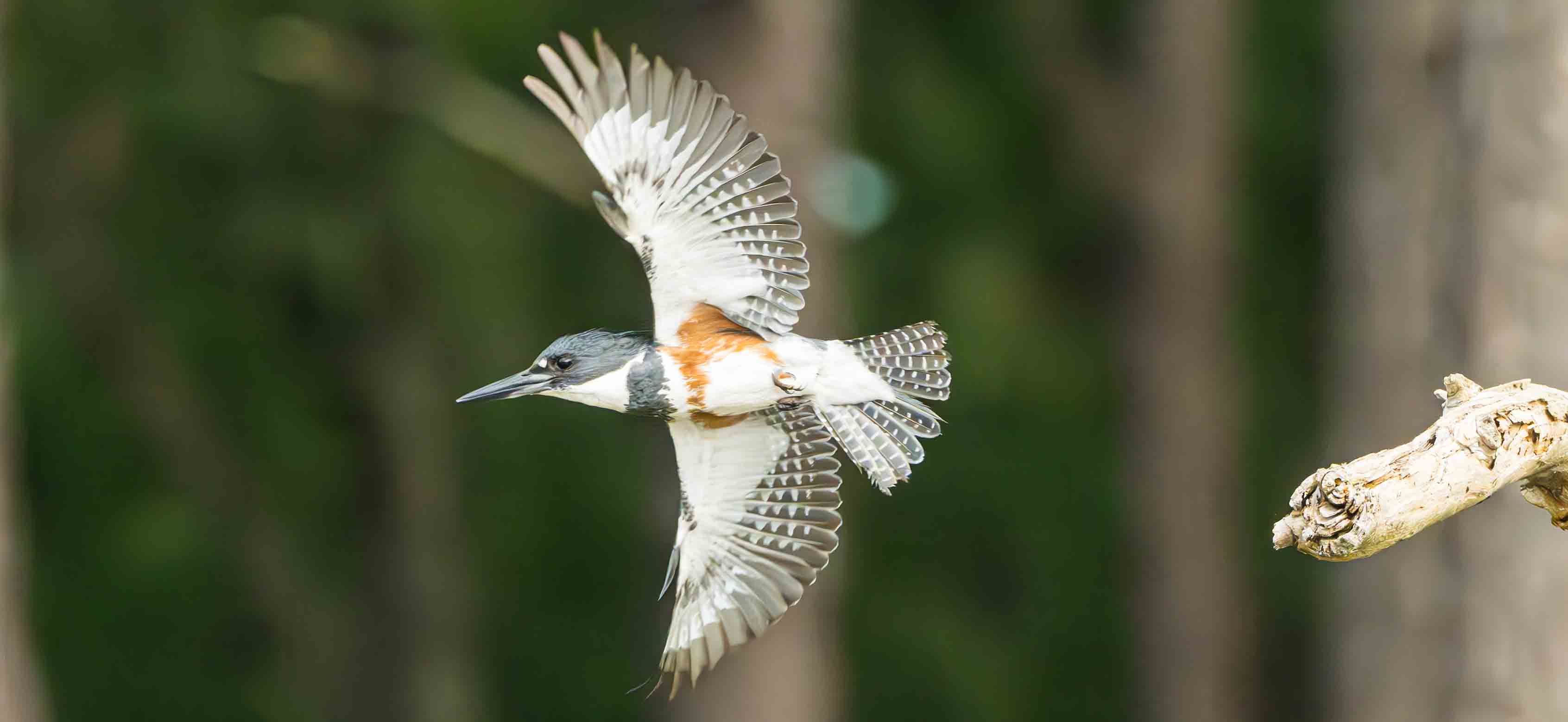
And there’s plenty to see along a shoreline alive with not just the raptors, but also cormorants, woodpeckers, flycatchers and sometimes hummingbirds. We watched Belted Kingfishers, among the speediest and wariest of birds, skitter a few feet from us along the surface monitoring their territories for food. During our visit, the woods were full of Red-headed Woodpeckers, adding a steady percussive beat to the day.

Here’s a glimpse of a few of the dozens of species we spotted:


Jordan Lake was created in 1982 from the Haw River in an era when the U.S. Army Corps of Engineers built dams, channeled rivers and constructed reservoirs to supply water and limit flooding as the country grew rapidly following World War II. Today, more than 400 of these projects that dot the U.S. also serve as a life-raft for wildlife in need of open habitat.
Jordan Lake has its environmental challenges. It has at times been choked by algae blooms, green slime formed by runoff from the Cape Fear River Basin that is home to more than two million people. When heavy rains come, the Haw River will sometimes flood the lake with trash washed down from upstream.
A “Bald Eagle factory”

But federal and state wildlife agencies, along with an army of volunteers, work hard to keep the lake clean. And because Jordan Lake supplies tens of millions of gallons of drinking water every day to the Triangle region, its banks are kept mostly free of development, which helps create the habitat that, while not pristine, will support these rich populations of birds and other wildlife.

A good barometer are the populations of species such as eagles and ospreys. When the lake was first created, there were no bald eagle nests at all. Today the population estimates range from 25 to 50. But Griffin, who’s in the best position to keep track, knows of more than 40 nests that are home to 80 eagles and their offspring. “That’s why I call Jordan Lake a Bald Eagle factory, an Osprey factory. It’s gotten to the point there are so many they’re pushing each other out to other places.”
One of the keys to keeping the lake healthy, of course, is to build public support for the conservation needed to manage not just the lake, but a huge watershed that spans from Greensboro to the coast. Griffin’s daily outings contribute to that cause by ferrying thousands of people over time up and down the lake. “That’s so crucial,” he said. “I see it on their faces. It’s a total reset when they get out here. We’re right outside Raleigh, where there’s plenty of stress. It’s so nice to have something like this so close.”


Leave a Reply