

When we moved to a new place in Nashville with a lot more space not long ago, I finally got a chance to display all my favorite bird photos on the walls. But picking the best from a sprawling library of 250,000 photos? That’s when I turned to artificial intelligence for help.
Almost everywhere these days, you hear how AI is changing the way we work. That’s especially true in bird research–a frequent topic on this website. But these same technologies developed for scientific avian studies can also guide everyday birders and photographers as we try to capture and appreciate the magic of birds.
That’s how I ended up with these ten photos, singled out by a combination of AI tools and bots and now scattered through this post. Think of them as breadcrumbs to help you along on this look at how AI technology is shaping bird photography.
Digging through a quarter million photos

It began a few months ago when I decided it was time to clean up the massive catalogue where I’ve gathered hundreds of thousands of photos over the past decade. The images are organized in Adobe’s Lightroom by date, species, and descriptions, but the library had grown difficult to manage, full of duplicates and forgotten photos. Simply put, it’s too large to keep track of what all is there.
So I teamed up with ChatGPT along with an AI search tool called Excire that can zip through photo libraries almost instantly — by topic, color, quality, aesthetics and more. You can search with just a few words and build collections of all sorts. I decided to see what Excire and ChatGPT would come up with when asked to find the images with the best aesthetics, composure and technical quality — basically the best shots I’ve got.
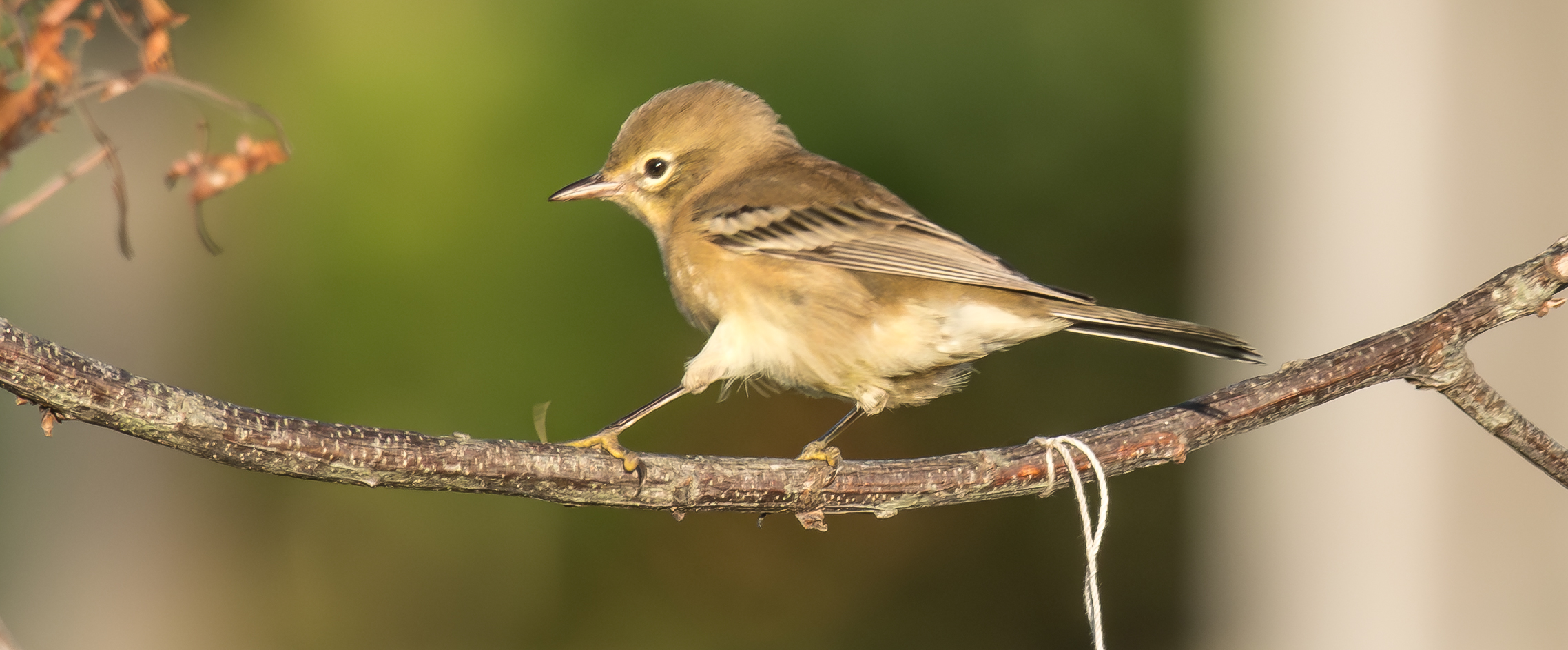
The photo of the lone Pine Warbler fresh from flight, shown at the top of this post, was one of the first the search uncovered, a photo I’d long since forgotten but which, on a second look, does indeed carry a real visual punch. The search also found the Rufous-tailed Hummingbird just above, spotted on a banana tree in Costa Rica after a rainstorm: A calm, striking moment for a normally hyperactive bird that puts you right on the soaked leaf with this little guy.
ChatGPT offered to be an editorial guide, and this turned out to be one of the most surprising parts of the experiment. This popular, high-powered bot helped me troubleshoot Excire when the software got stuck, (which happened a lot), and also offered insights on why certain images stood out. I loved its take on this next photo that I hadn’t thought much of — taken on the Big Island of Hawaii three years ago. (The description sounded like something from an art critic. Beverly couldn’t believe the insights Chat delivered that you’ll see in many of the captions.)
“The photo recognizes more nuanced factors like visual harmony, natural tension, and even a sense of motion or readiness in a bird’s posture,’’ ChatGPT wrote. “It also reminds us that AI can bring images back into view that we may have overlooked — an unexpected gem rediscovered through an algorithm’s “eye.”

This is the last in a series of the most popular posts of the past year. This originally ran July 18 as part of a deep look at how artificial intelligence and bird photography intersect. A second related post explored what makes a good bird photo: what ingredients make a bird picture stand out. Thank you for coming along on this look back at the past year. We’re soon leaving for Florida, for our traditional winter travels through the Sunshine State. And in February we’re headed to Belize for a birding tour. Watch Flying Lessons for our reports and photos from these travels.
Not all of AI’s suggestions were great. It missed a lot of my personal favorites, and some of its choices were puzzling. But overall the picks made me think twice about images I’d skipped over — and a few will end up framed on our walls. Here are some that made the shortlist.


Beyond the screen: How AI helps in the field

This is just the latest way AI is weaving itself into bird photography. Over the past three years, Beverly and I have spent endless hours reporting on the new technologies for our book, A Wing and a Prayer: The Race to Save Our Vanishing Birds. Many of those research breakthroughs we covered are now helping birders and photographers in the field.
Take Merlin Bird ID, the now-ubiquitous smartphone app from the Cornell Lab of Ornithology. It can instantly match a bird’s song with the species. It also helps identify birds from photos, which makes it a favorite trick of mine when I’m unsure what I’ve just captured. I’ll snap a photo of my camera’s viewfinder with my phone and let Merlin weigh in.
Then there’s eBird, another Cornell Lab creation driven by AI-driven mapping and prediction. It not only tells scientists where birds are moving, it gives birders real-time updates on what to expect at hotspots anywhere you travel. We check eBird before every outing — both to prepare and better understand the big-picture movement of birdlife around the globe.

How it all fits together

There are good reasons to be skeptical of how artificial intelligence applies to photography. Generative AI is flooding the web with flawless bird images created from from thin air by tools like ChatGPT and AI generators. Too often, they’re not even labeled as fabrications. That hurts the cause of conservation photography, which depends on authenticity.
But used thoughtfully — and without altering images — AI can be a real gift. These tools help with the tedious, time-consuming work of sorting and organizing. They can free us to spend more time in the field and more energy editing the best of what we bring home.
And, as I’ve discovered, they can even teach us something new about the work we’ve already done — surfacing photos we’ve overlooked and finding ones we’ve forgotten about or lost track of. Not only will some of these will end up on our walls but also on the pages of this website. (Stay tuned.)
There’s one more step I’d like to take. In an upcoming post, I’ll settle on a final set of ten or twelve favorites, based both on my years of seek out what I think are is the best photography and AI’s rapid-fire assessments. Let’s see what we come up with by putting our heads–and algorithms–together.


Leave a Reply