
One of the topics we explore here on Flying Lessons is the transformation taking place with modern bird research. When we start talking about this with friends and relatives, it can be hard to hold their attention.
But here’s why this is worth sticking with: At a time when habitat loss, climate change and urban hazards have destroyed a third of the bird population in our time, the best remedy may be the powerful technologies that scientists are using to create more powerful conservation practices.

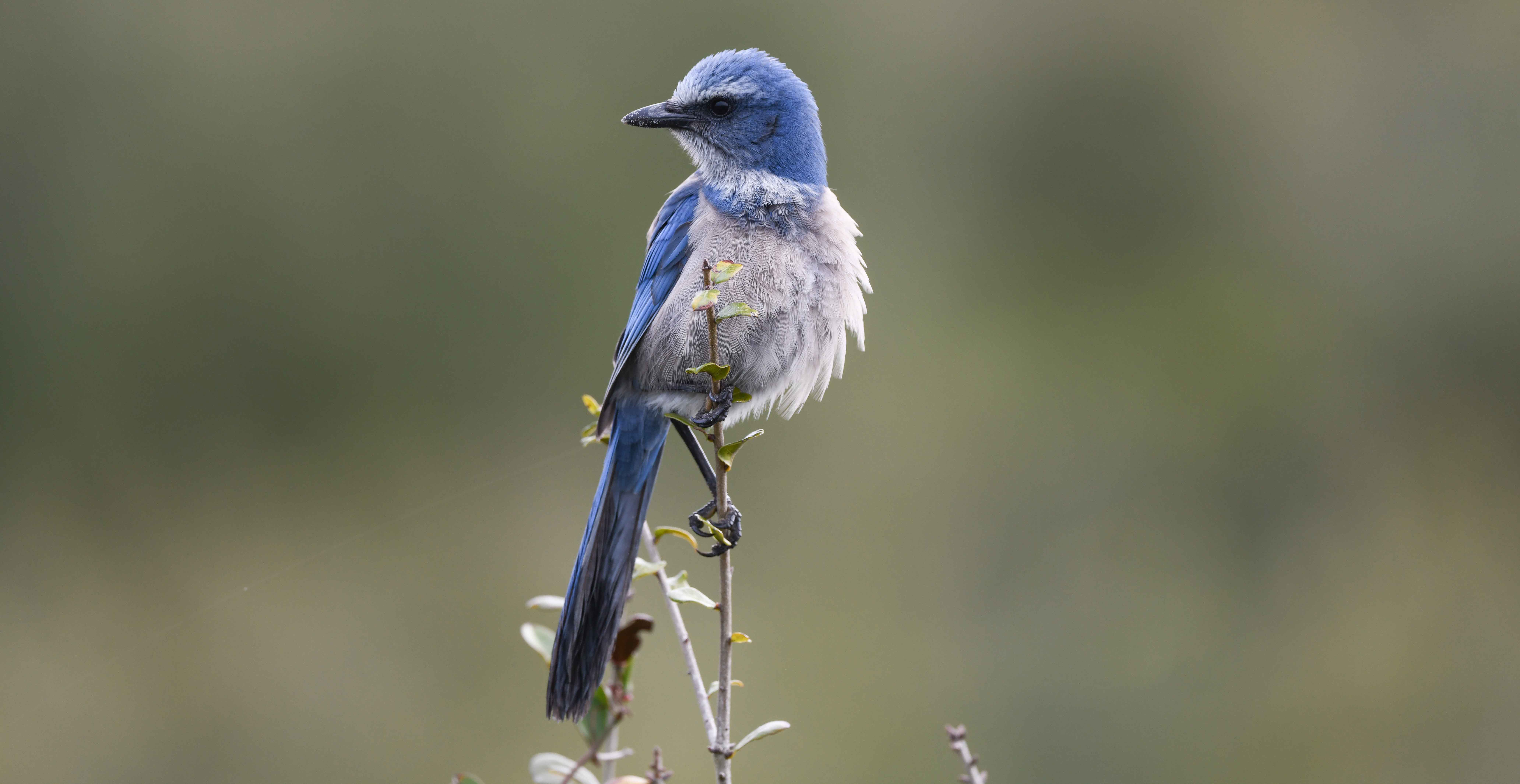
One such story is running this week in The Miami Herald, about a radio telemetry system at the Archbold Biological Station in Central Florida where we visited a few months ago. The research project equips young Florida Scrub-jays with solar-powered tags that enable scientists to track their every waking move.
Scrub-jays, the only bird found exclusively in Florida, have steadily lost population to development as the state has grown into the country’s fourth most populated. Researchers think they can halt the jays’ decline if they understand how to make the most of the remaining scrub habitat, including a string of public lands through the state’s mid-section.
These studies are expensive and time-consuming, and they require a level of public and political support that doesn’t come easily. That’s why we think it’s worth coming back to these research projects and trying to tell the stories in detail. We hope you’ll take a moment to read this piece in the Herald, as well as earlier Flying Lessons posts on the Scrub-Jay, one about the striking character of this bird and another about the early findings on this study.


Leave a Reply