


Second of three parts
First you take a 45-minute boat ride along the St. Marys River on the George-Florida border to reach Cumberland Island. Then you pedal your bike half an hour through the sandy path from one end of the mostly deserted island to the other. The route takes you through a mile of stunted Oak forests before finally opening to a beach that hasn’t changed in thousands of years.
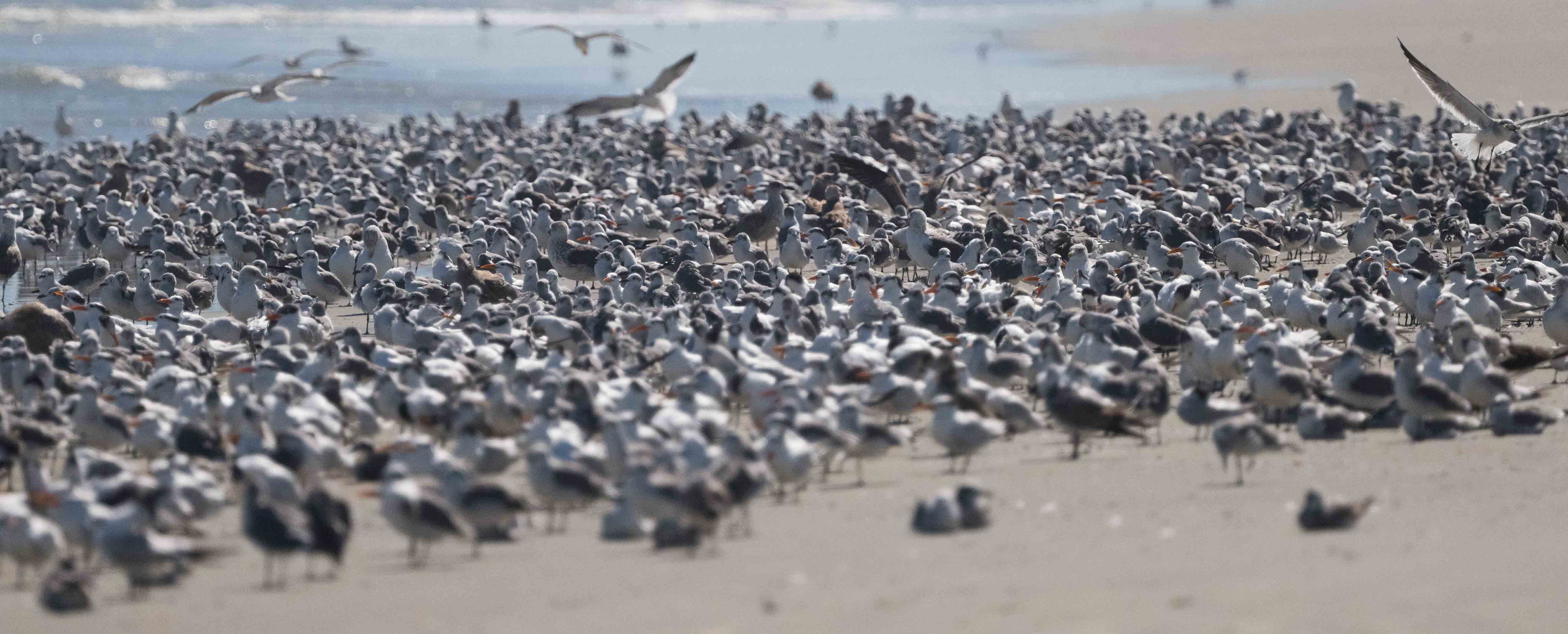
The desolate strand here is so so full of birds in places that they cover the sand from the dunes to the water. They jostle for position, fight over the fish and crustaceans, and take off and land every few seconds like a busy avian airport.
Southernmost Georgia’s Cumberland Island is at the top of our list of favorite places to take in the wealth of North America’s coastal birds, the theme of this post, our second of three parts. (Here’s the first in the series on why these birds are so precious.) Once a private vacation haven for wealthy industrialists, today the island has gradually been returned to wildlife, winged and otherwise, from eagles and pelicans to armadillos and turtles.

While this island has the advantage of miles of untouched land, there are plenty of places along the Atlantic Coast also rich in birdlife — places that don’t take half a day just to get there. In our travels along the eastern edges of six states and a thousand miles this fall and early winter, birds were never out of sight. We ran into Brown Pelicans skimming just past the waves, foraging gulls and terns, Ibis circling overhead, and Osprey and kingfishers diving for fish.
Among my favorite birding moments are in the early mornings and late afternoon on the beach when the dimmer light makes the best photos and birds are hard at work. On many days, if you kick off your shoes and plant yourself on the edge of the water, a full parade will find its way to you.


Another of our favorite places to catch the shorebird show is along the Cape Hatteras National Seashore, where 70 miles of open beach and 25,000 acres of back bays and marshes are a magnet for birds. Especially at the height of the migration season, entire clouds of Sanderlings collect along the beaches, and then rise into clusters every so often to sail like mobile clouds out across the water. Here’s our separate post on these tiny world-travelers, and here are a few photos from the national seashore.


Farther down the coast of North Carolina coast is Topsail Island, where the combination of the barrier island surf and the open bay make this a haven for gulls and terns. We took a boat ride up and down Topsail Bay one afternoon when the wind was blowing enough to hold the foraging birds in the air like kites. It was a photographer’s dream:


Speaking of gulls and terns, here’s a gallery of the terns we spotted along the Delaware beach we mentioned in our first post, where the Royal Tern transfixed us with its acrobatics, flipping its catch into the air and then gulping it down in midair:


Two hours south of Topsail Island is Huntington Beach State Park, in South Carolina just outside of Myrtle Beach, with 2,500 acres of sand, ponds, marshes and waterways that offer every coastal setting — and thus almost every species we hoped to see. Egrets, herons, plovers. Here’s a gallery:


Huntington Beach is just one of the many places along this coast where you run into Belted Kingfishers, the skittish, elusive birds that tend to flee as soon as you spot them. (Here’s an earlier post on this sly, speed demons.) I’ve spent years trying to catch these dedicated fishing machines in flights that reach 25 miles an hour. Here’s a glimpse of the ones we ran into in South Carolina:


A little further south, the coastal geography expands into miles upon miles of marshes that serve as the maternity wards for so much marine and avian life. We spent several days at Skidaway State Park in Georgia just east of Savannah where you can walk for miles along marshy paths with a magnificent mix of wading birds, woodpeckers, warblers, shorebirds and raptors.

Along this part of the Atlantic coast, more than half of the oceanfront islands are undeveloped or at least underdeveloped. Many are accessible only by boat, including the aforementioned Cumberland Island. While it takes time to get there, you’re deeply rewarded for your patience with more birds than pretty much anywhere else along the coast.
It’s a glimpse of how plentiful the wildlife can be where we give the ospreys, gulls, terns, whimbrels, sanderlings, vultures, turtles, wolverines, deer — it’s almost an endless list. While we won’t see these kinds of populations on developed stretches of the coast, there’s a lot that can be done to help protect that remains in places like the Delaware’s Dewey Beach, North Carolina’s Outer Banks, Georgia’s Skidaway and Florida’s massive coast.
Look for our third and final post in the coming weeks on the prospects and projects in the works to protect coastal birds.


Leave a Reply