
By Anders Gyllenhaal
When I climbed to the outdoor top of the famous Opera House in Oslo, Norway, I could see most of the downtown, the busy harbor and the ships coming and going from the North Sea.

The view also included a very friendly and stubborn European Herring Gull, perched on the best corner of the balcony and unwilling to move no matter how close you got.
We were touring Scandinavia to celebrate our 40th wedding anniversary and see the part of the world where my family came from. There wasn’t much time for bird photography – and we decided to stay mostly in the cities of Stockholm, Copenhagen, Bergen, Stavanger and Oslo.
But I was struck to find no shortage of species adapting to urban life despite the most beautiful fjords, mountains and islands in the world just around the corner. So along with shooting the magnificent hallmarks, many of which are centuries old, I couldn’t help but keeping watch for birds.
How Scandinavian cities embrace birds
It turns out that Scandinavian cities stand out for making room for their birds. They boast more open space and trees than anywhere else in Europe. In Oslo, 98 percent of residents live within a thousand feet of a park, greenway or protected area, and the figures are high in all these cities.

Since many cities are rich in waterways and islands, so is the population of gulls, terns, and cormorants. Ducks and geese are especially plentiful. So much so they are adapting their feeding routines to human schedules, such as school and waste facility openings. The healthy environment, a singular emphasis here, also provides a wealth of natural food sources. I loved this photo of a herring gull flying down the busy harbor in Bergen, Norway, with a star fish in its mouth, plucked from a downtown channel filled with marine life.


Naturally, the birds we found tended to be the most adaptable of species, such as the White Wagtail, a small, frenetic species that constantly flicks its tail and bobs its head. Another is the Mute Swan, which can build its nest right up against homes and businesses. We ran into a Greylag Goose, unafraid of the crowds, hanging around the castle of an early king of Denmark
Like almost everywhere in the world, House Sparrows constantly prowl the streets, sidewalks and cafes in search of bits of food. Only these aren’t the invasive variety that have flooded the U.S. This is the Old World native species that started the global takeover decades ago.
Studies dig into what makes a difference

The importance of making room for birds in cities is documented in scientific research. A study published just this month in Nature examined birdlife at 30 sites in Gothenburg, Sweden, comparing densely developed neighborhoods with greener parts of the city.
Not surprisingly, the greener areas supported more species. But the researchers found something particularly useful for growing cities: even in densely developed neighborhoods, bird diversity increased when there was more natural habitat nearby and when those patches were connected to larger green areas. In other words, an isolated park helps, but a network of parks, trees and natural corridors can help even more.
Scandinavian countries have something to teach us
Many of the places we visited built their urban settings well before the realization that the world is losing its bird populations. The challenge now is to make sure they don’t lose more ground as these cities grow. Scandinavian countries, which have adopted the most stringent environmental strategies in the world, are among the best places to keep their birds.

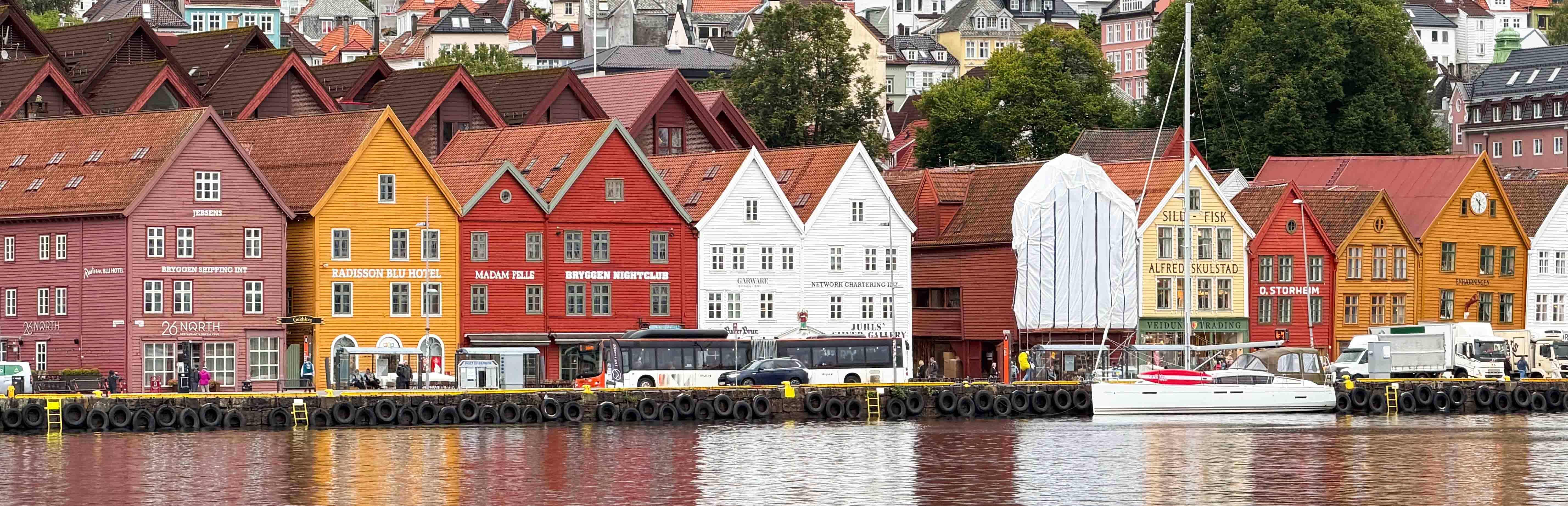
I especially loved seeing the flocks of birds circling the historic buildings, churches and squares. One of my favorite photos is this gull zipping past one of Bergen’s famously colorful waterfront homes and shops.
With the deep orange background, it’s not the usually setting for a bird photo. But it’s the perfect symbol for what we found in Sweden, Denmark and Norway where populations of birds and people have learned to coexist.


Leave a Reply